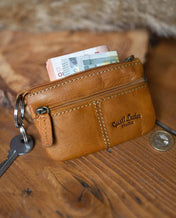
Depending on the type of leather, different methods should be used to remove stains from leather products.
Every stain on leather alters the leather’s chemical structure. Once the leather has absorbed dirt, oil, paint, or similar substances, these are very difficult to remove.
Procedure for removing stains from leather
If you decide to try this anyway, there are a few tips to keep in mind:
- Always use a small sponge, not large or harder-to-control rags or similar items!
- Do not rub the leather; instead, use dabbing motions!
- Allow any solvents used to soak in thoroughly!
Stain removers for leather
Here is an overview of which types of stains can be removed with which products. These are not home remedies, but products that are also used professionally to reliably remove stains.
| Type of stain | Remover |
| Tannin stains, fruit stains | Chlorine bleach (100g calcium hypochlorite + 50g baking soda dissolved in 1 L of water) |
| Mold stains | Salicylic acid + rubbing alcohol in a 1:4 ratio |
| Oil stains, grease stains, lipstick stains | Carbon tetrachloride |
| Ink stains, carbon copy stains | Acetic acid and oxalic acid, 1 part oxalic acid (crystalline) + 4 parts 96% acetic acid |
| Blood stains | Cold soda water or acetic acid |
| Liqueur stains | Rubbing alcohol + ammonia in a 1:1 ratio |
| Rust stains | 5% hydrochloric acid solution |
| Dirty and worn areas | Clover salt in an aqueous solution |
You can find further information under the heading "Cleaning Leather."
Source: Hegenauer, Hans: Leather Craftsmanship, Manufacturing Professions, Heyer, Essen: 9th ed. 2012.